Winning Images
Winner: Sanghyun Jeon, Department of Chemical & Biomolecular Engineering
Winner Cover Art Category: Xiao Huan, Diao Lab, Department of Chemical & Biomolecular Engineering
Finalist: Priyotosh Bairagya, Diao Lab, Department of Chemical & Biomolecular Engineering
Finalist: Xiao-Huan, Diao Lab, Department of Chemical & Biomolecular Engineering
Finalist: Noam Gamburg, Jun Lab, Department of Chemistry
Finalist: Jusung An, Mirica Lab, Department of Chemistry
Finalist: Yupeng Li, Tajkhorshid Lab, Center for Biophysics & Quantitative Biology, Departments of Chemistry and Biochemistry, Beckman Institute
Finalist: Deborah Schmitt, Su Lab, Department of Chemical and Biomolecular Engineering Finalist: Noam Gamburg
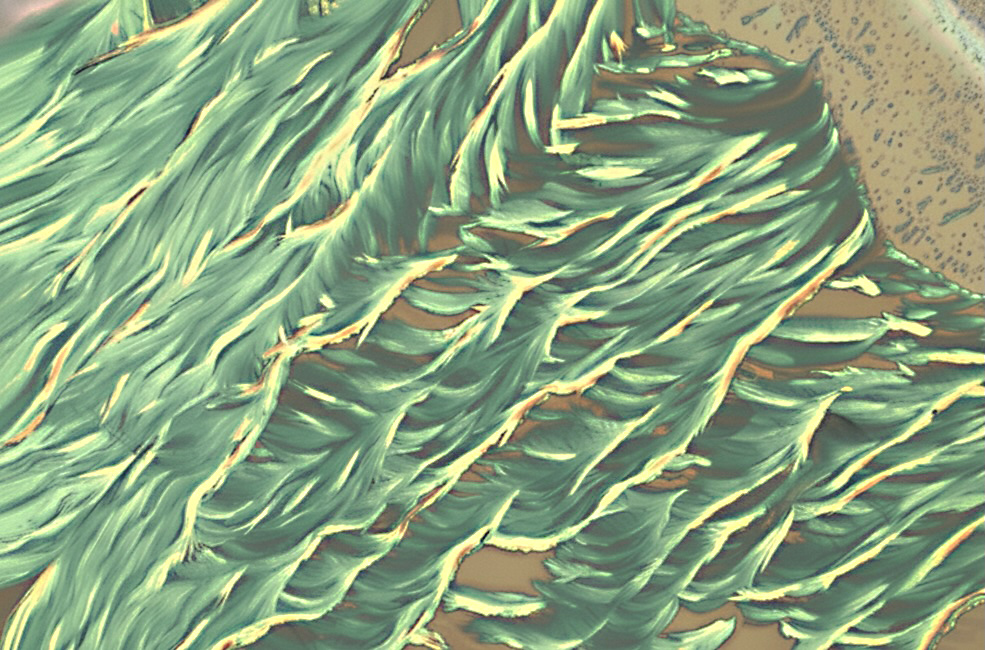
Microscale Wonders: Hidden Emerald Shores
Winner: Sanghyun Jeon, Department of Chemical & Biomolecular Engineering
Printed conjugated polymers can assemble into fiber-like aggregates. By controlling the printing conditions and flow dynamics, we observed wave-like features reminiscent of shorelines. The image was taken under linear polarized microscopy, and each domain exhibits different brightness and color depending on its alignment.
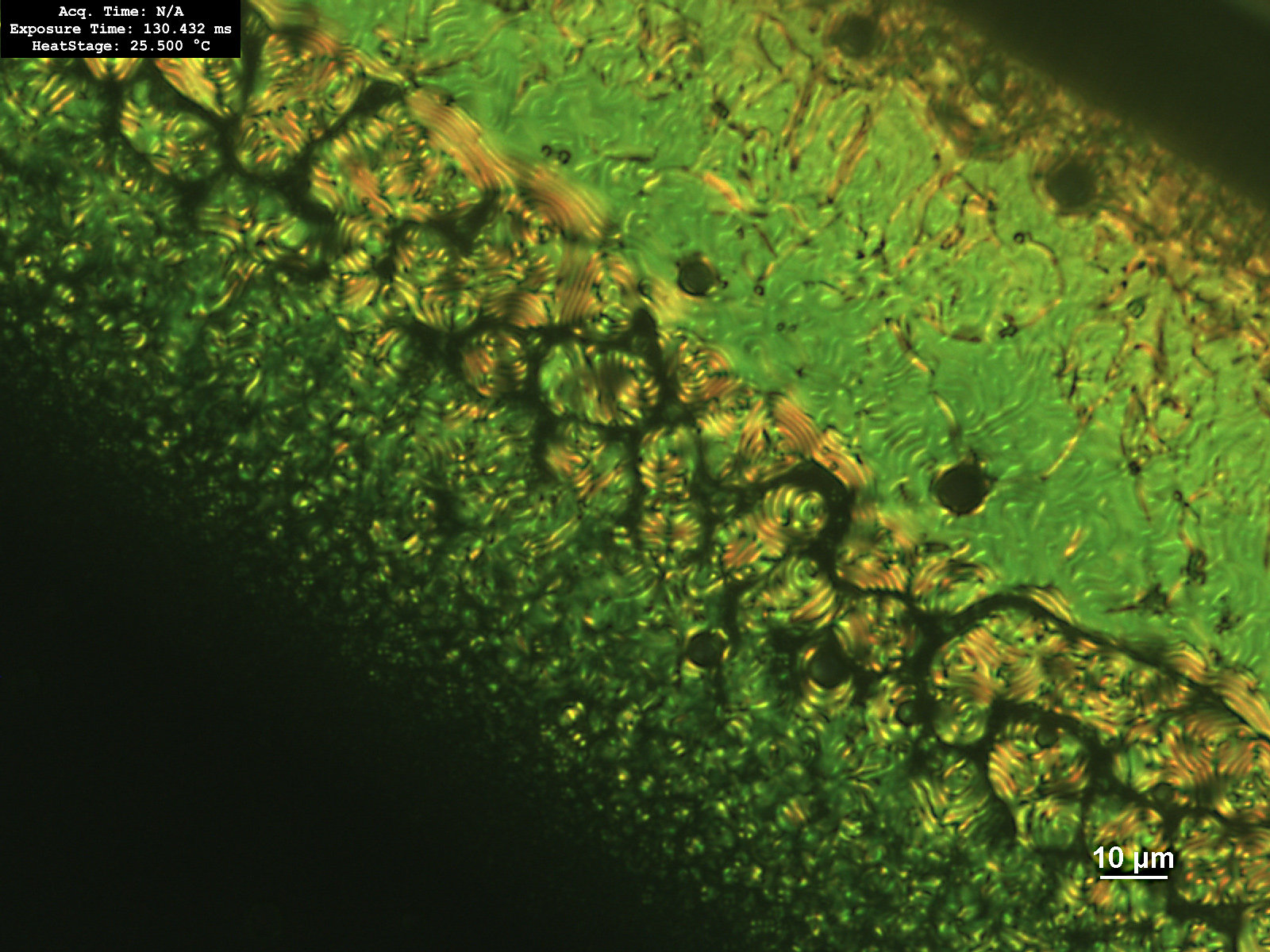
Chiral Fingerprint
Finalist: Priyotosh Bairagya, Diao Lab, Department of Chemical & Biomolecular Engineering
Printed conjugated polymers can assemble into fiber-like aggregates. By controlling the printing conditions and flow dynamics, we observed wave-like features reminiscent of shorelines. The image was taken under linear polarized microscopy, and each domain exhibits different brightness and color depending on its alignment.
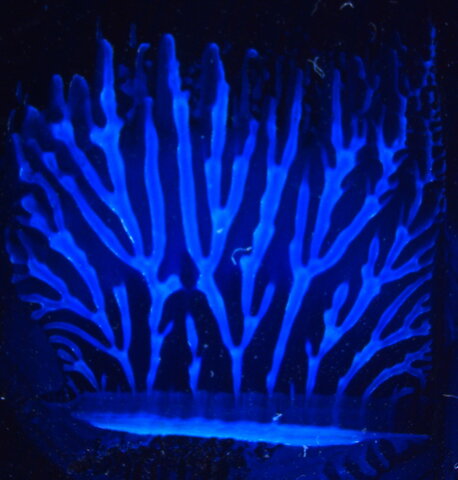
Growing in silence
Finalist: Xiao-Huan, Diao Lab, Department of Chemical & Biomolecular Engineering
As toluene evaporated between two glass slides, bottlebrush block copolymers began to branch and rise, like a tree taking shape from air. Their silent self-assembly scattered light into color, as if growth itself had taken root in the molecular world.
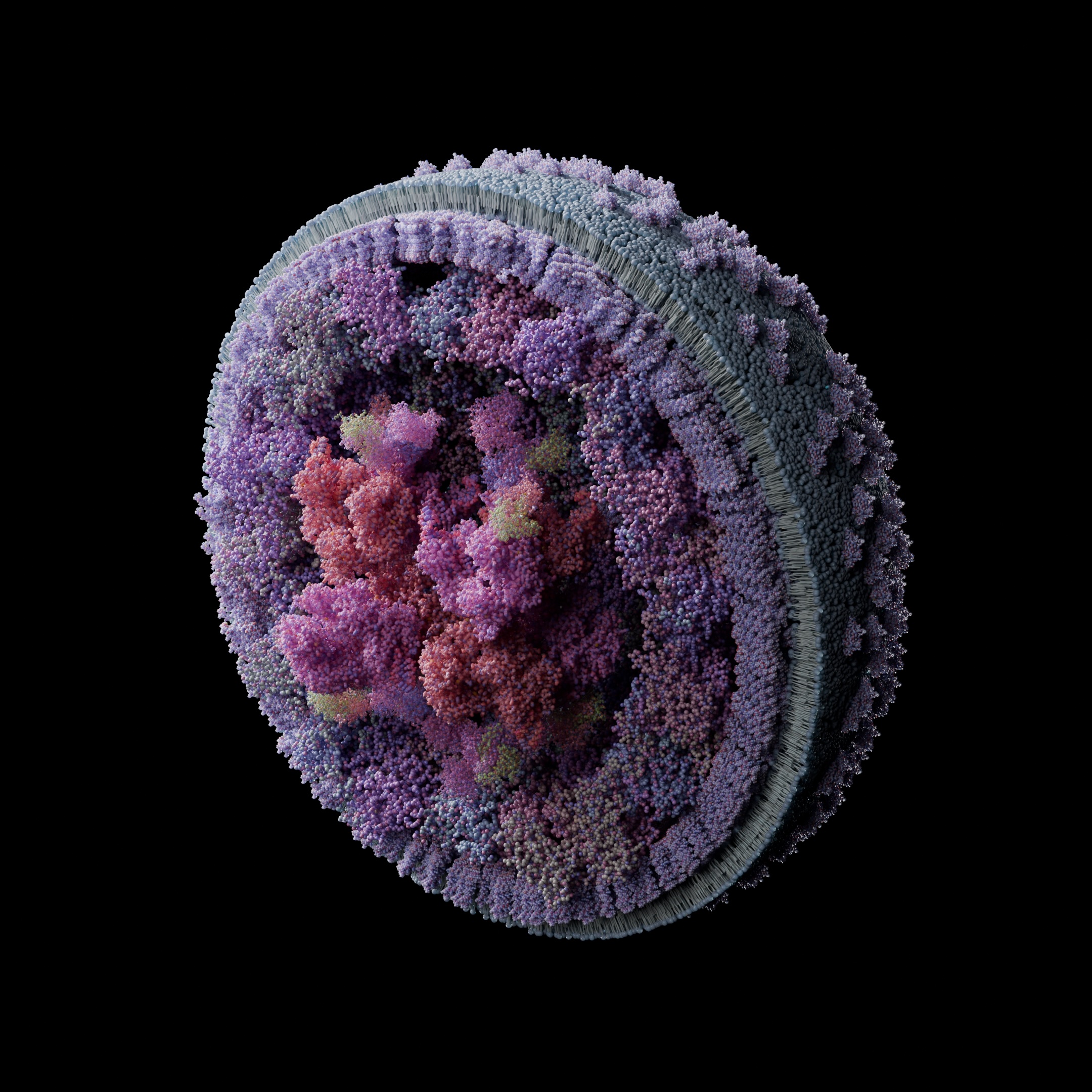
Virus-Like Particle with CRISPR Cargo
Finalist: Noam Gamburg, Jun Lab, Department of Chemistry
Rendered is an artistic depiction of an engineered virus-like particle (eVLP) encapsulating CRISPR-Cas9 ribonucleoproteins. eVLPs are synthetic nanostructures that mimic viral architecture while remaining non-infectious, enabling precise genome editing without nucleic acid delivery.
Constellation of a Diseased Brain
Finalist: Jusung An, Mirica Lab, Department of Chemistry
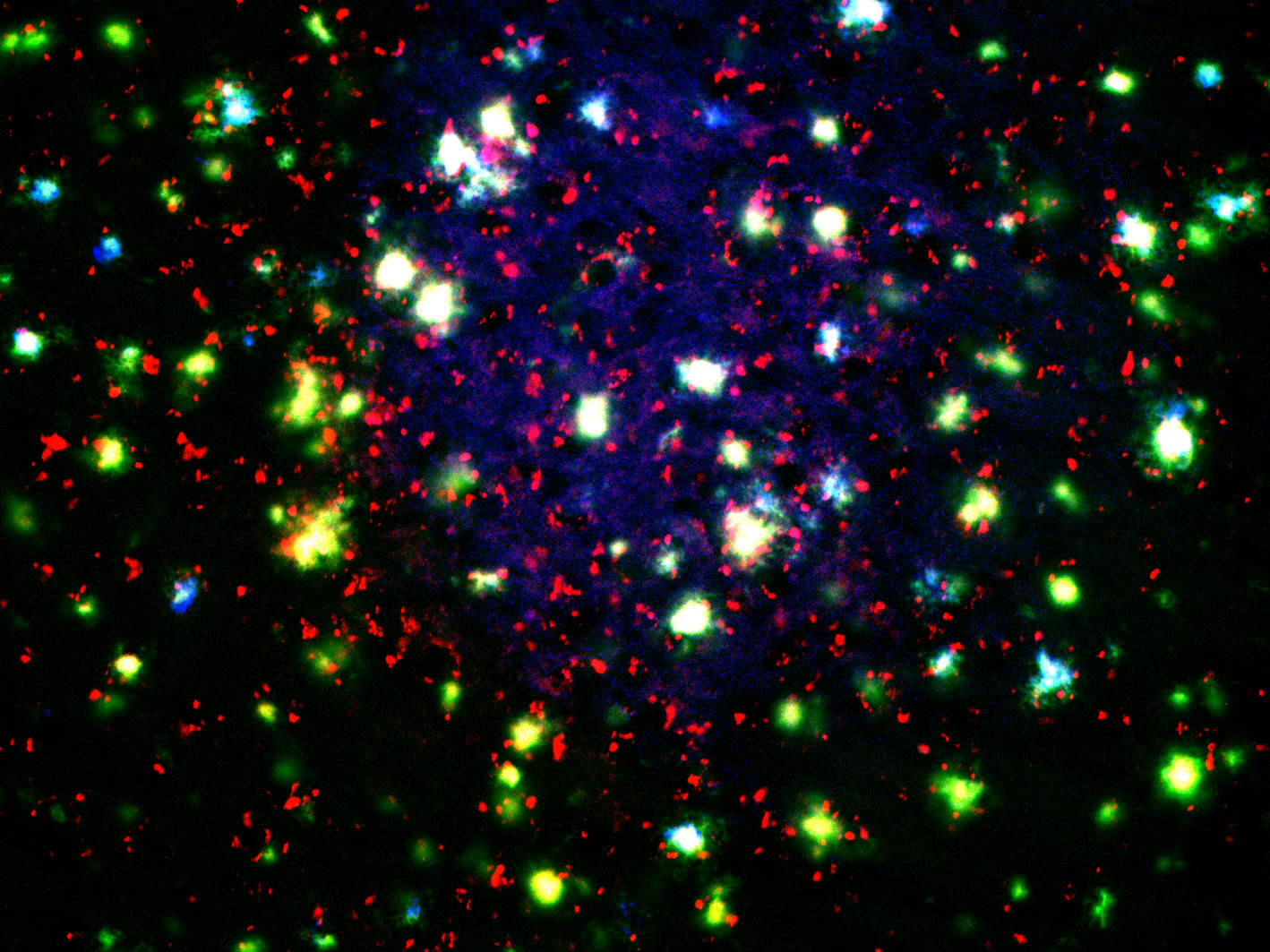
This multicolor brain section displays amyloid-rich plaques scattered across neuropil. Like star clusters in a night sky, staining these deposits with small-molecule fluorophores reveals their distinct patterns and progression, transforming an otherwise uniform tissue slice into a spatial map of Alzheimer’s disease pathology.
Lipid on the Move
Finalist: Yupeng Li, Tajkhorshid Lab, Center for Biophysics & Quantitative Biology, Departments of Chemistry and Biochemistry, Beckman Institute
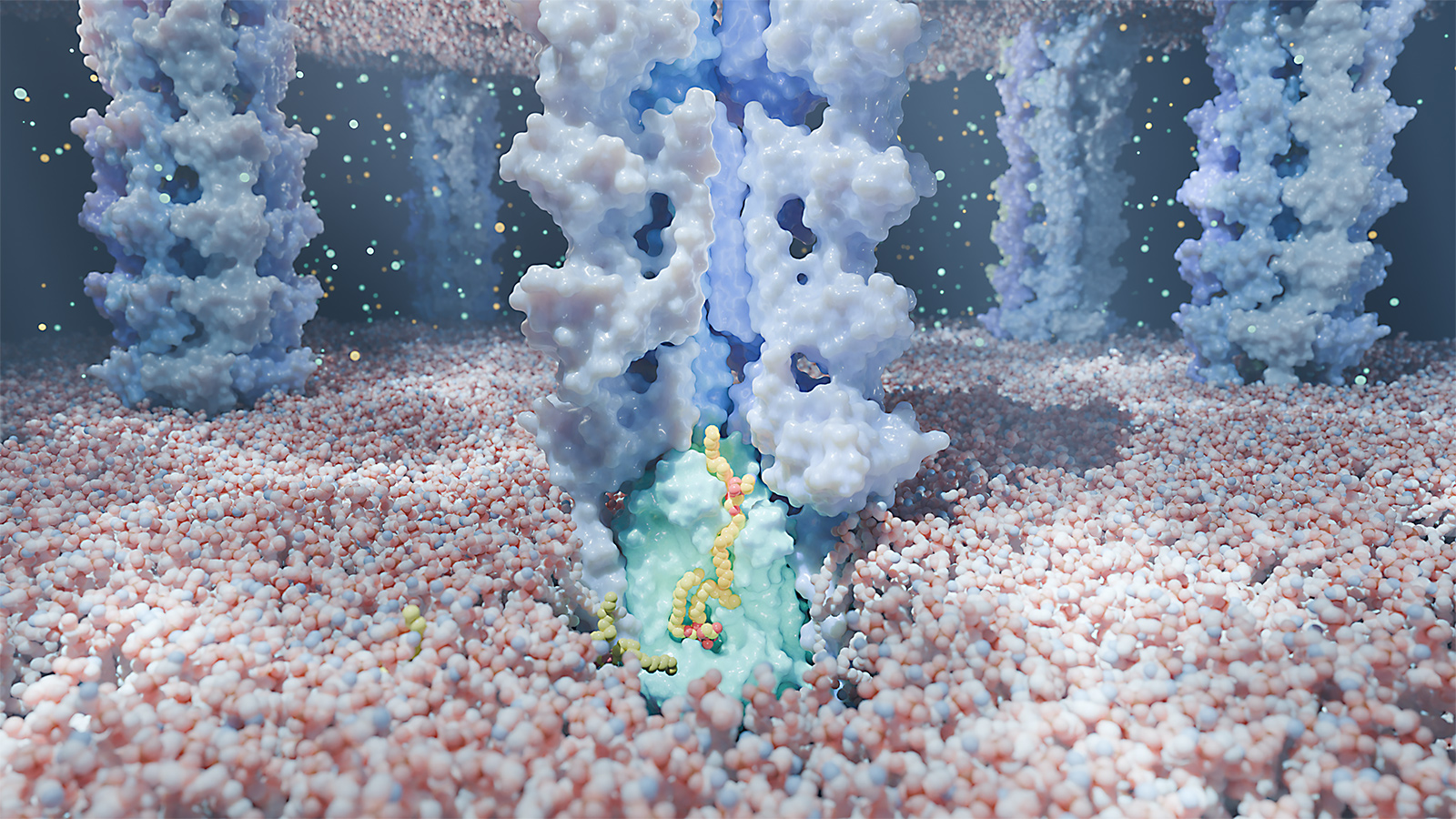
Gram-negative bacterial outer membrane (OM) forms an impermeable protective barrier. This image depicts the LetAB-mediated transport of a key OM building block, phospholipid, from inner membrane towards OM. The yellow lipid is extracted and elevated by LetA (cyan), then positioned for entry into LetB (blue) to shuttle across the periplasm.

The Kiss of the Planets
Finalist: Deborah Schmitt, Su Lab, Department of Chemical and Biomolecular Engineering
This scanning electron micrograph captures porous polymer-functionalized particles whose surfaces are uniformly functionalized with poly(methyl methacrylate) chains. The polymers extend between nearby particles after contact, forming bridges that reflect their prior proximity: the soft matter equivalent of a “planetary kiss” between neighboring particles.
Printable Structural Colors
Winner Cover Art Category: Xiao Huan, Diao Lab, Department of Chemical & Biomolecular Engineering
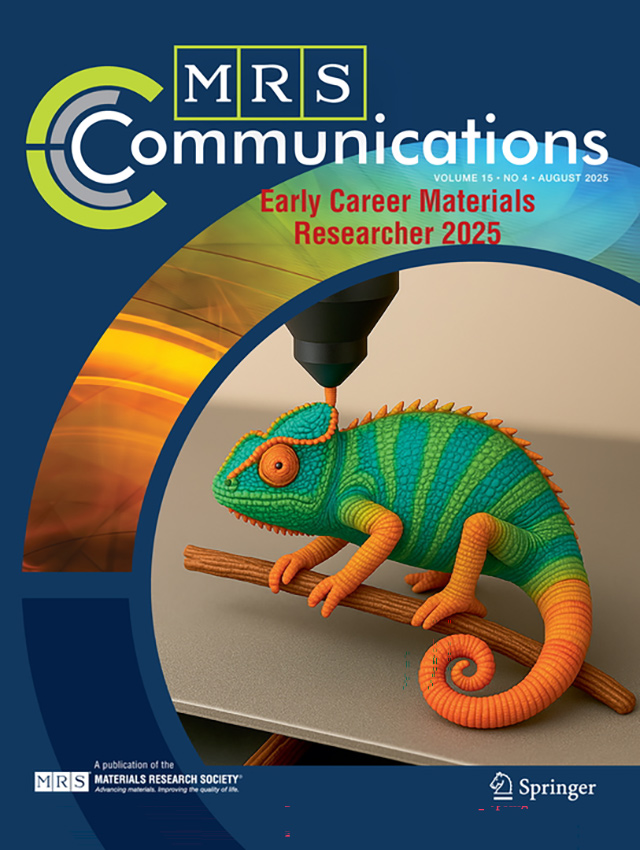
An illustration representing printable structural colors. Inspired by the chameleon’s natural coloration, the image shows how additive manufacturing can recreate nature’s color through nanoscale structural design rather than pigments.